
Is a Geothermal Heat Pump Worth It? Honest Pros and Cons
Quick answer: For most homeowners who plan to stay 7+ years — especially in cold climates or those replacing fuel oil, propane, or electric-resistance heat — a geothermal heat pump is worth it. It delivers the lowest running costs and longest lifespan of any home HVAC system. It’s not the best fit if you have a tight upfront budget, no space to install a ground loop, or plan to move soon.
Geothermal is often marketed as a no-brainer. The truth is more nuanced, and being honest about the trade-offs is the only way to decide well. Here’s the balanced picture — real advantages, real drawbacks, and who each applies to.
The real advantages
Lowest operating costs of any HVAC system. By exchanging heat with the stable-temperature ground, geothermal delivers 3–5 units of heat per unit of electricity. The DOE estimates 30–70% lower heating costs and 20–50% lower cooling costs versus conventional systems — typically $800–$2,000 in annual savings.
Exceptional lifespan. The indoor unit lasts 20–25 years and the buried ground loop 50+ years. Compare that to 15–20 years for an air source heat pump or 10–15 for many furnaces. Over decades, you may replace an air source system twice before touching the geothermal loop.
Steady performance in any weather. Because the ground stays warm all winter, geothermal efficiency barely changes on the coldest days — unlike air source systems, which work harder as temperatures drop. Field studies show ground source systems track their rated efficiency far more closely across a full season.
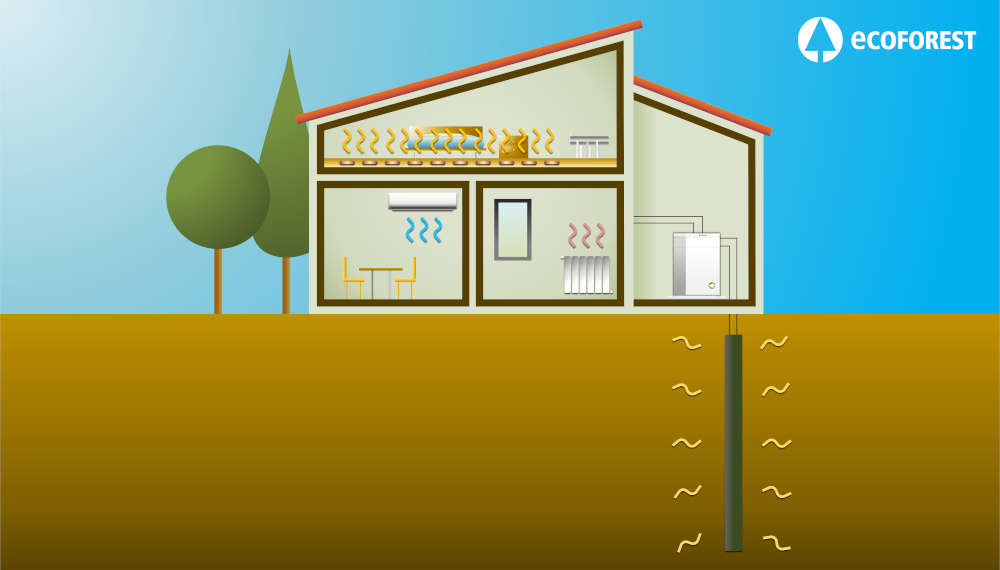
Heating, cooling, and hot water in one system. A single unit covers all three, and with technology like Ecoforest’s HTR Superheater it can produce hot water up to 176°F (80°C) — no separate water heater or furnace needed.
Quiet and hidden. There’s no large outdoor condenser cycling on and off. The loop is underground and the unit is indoors, making geothermal one of the quietest, least intrusive options available.
Adds resale value. Low operating costs and eco-friendly technology are increasingly attractive to buyers.
The real drawbacks (the ones that matter)
Let’s be equally honest about the downsides.
High upfront cost. At $18,000–$45,000 installed, geothermal costs significantly more than an air source heat pump or a conventional furnace-and-AC. The payback is real but takes years, and the initial outlay is a genuine barrier for many households.
The federal tax credit is gone. The 30% residential Section 25D credit ended December 31, 2025 under the One Big Beautiful Bill Act. Systems installed in 2026 no longer qualify, which lengthens payback for homeowners who can’t access state or utility rebates. This is a meaningful change from what most older articles describe.
Installation is disruptive and site-dependent. You need land for a horizontal loop or drilling access for a vertical one. Rocky soil raises drilling costs, and retrofits are more involved than new construction.
Payback depends on how long you stay. If you move within a few years, you may not recoup the premium — though the resale bump offsets some of it. Geothermal rewards long-term ownership.
It’s not a DIY project. Proper sizing and loop design require a specialized, certified installer. A poorly designed system underperforms, so contractor quality directly affects whether the investment pays off.
So, is it worth it for you?
Geothermal is worth it if you:
- Plan to stay in your home 7+ years
- Live in a cold climate with high winter heating loads
- Currently heat with fuel oil, propane, or electric resistance (biggest savings)
- Are building new or renovating (lower install cost)
- Value long-term value, quiet operation, and low maintenance
Geothermal may not be worth it if you:
- Have a limited upfront budget and no rebate access
- Lack land or drilling access
- Plan to sell within a few years
- Already have an efficient modern gas furnace in a mild climate (smaller savings)
In those cases, an air source heat pump is often the smarter, more affordable choice — and still far more efficient than combustion heating.
Getting the most from the investment
If geothermal fits your situation, the equipment and installer determine whether it delivers. Ecoforest’s ecoGEO range is built for high, stable seasonal efficiency (SCOP up to 4.7) with the durability a decades-long investment demands, and real-time optimization through the Ecoforest Home app and Easynet helps protect that efficiency over the system’s life.
As Spain’s only geothermal heat pump manufacturer, Ecoforest brings decades of European engineering to the U.S. market, paired with local support. Whatever brand you consider, choose an IGSHPA-certified installer and compare multiple bids — with geothermal, design quality is everything.
Frequently asked questions
What are the main disadvantages of geothermal? High upfront cost, disruptive installation that needs land or drilling access, dependence on staying in the home long enough to recoup the investment, and the loss of the federal tax credit in 2026.
How long does a geothermal heat pump last? The indoor unit lasts 20–25 years; the buried loop lasts 50+ years — longer than any other HVAC option.
Is geothermal worth it without the tax credit? Often, yes — the running-cost savings are large and long-lasting. But payback is longer than before, so state and utility rebates now matter more. Verify what’s available in your area.
Does geothermal work in cold climates? Yes, exceptionally well. The ground stays warm below the frost line, so performance is stable even in severe winters.