
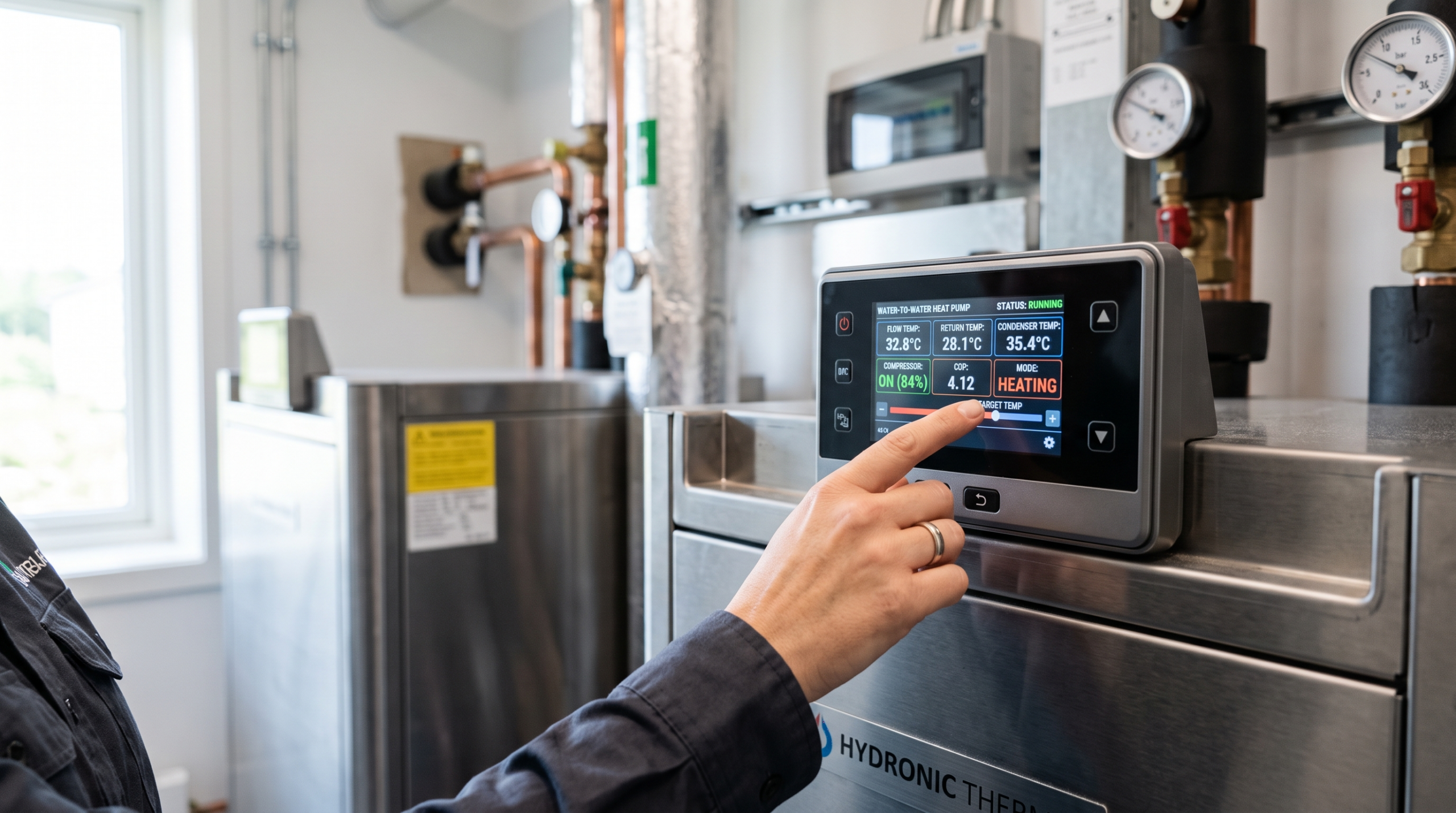
SPF vs. COP: The Number Heat Pump Brands Don’t Want to Talk About
Every heat pump spec sheet leads with the same flattering number. COP, measured once, under one set of lab conditions, at the single operating point where the unit performs best. It is the number on the box, and it is also the number least likely to show up on a real utility bill, because a heat pump does not run one day a year at one temperature. SPF is the number for the other 364 days, in the US and in Canada alike, and it is the one most spec sheets leave out.
- COP is measured at a single fixed condition under AHRI/ISO 13256-1 in the US, adopted in Canada as CSA C13256-1. It is a lab snapshot, not a season.
- ENERGY STAR-certified ground source heat pumps use about 45% less energy than a standard heating and cooling system, according to Natural Resources Canada.
- Ground-source heat pumps never run a defrost cycle, because the ground loop stays roughly 45 to 75°F year round regardless of outdoor air, per the U.S. Department of Energy.
- The real gap between COP and SPF in a combination unit usually comes down to domestic hot water, since heating water to 120-140°F takes a bigger compressor lift, and a lower COP, than space heating alone.
Why One Test Point Isn’t the Whole Story
The SPF vs COP heat pump efficiency question sounds technical, but it comes down to something simple: one of these numbers describes a lab, and the other describes a winter. COP, or coefficient of performance, is the ratio of heat a unit delivers to the electricity it consumes, measured at one fixed set of conditions in a certified lab. It is accurate. It is also true for exactly one moment, the same way a car’s window-sticker mpg is true for exactly one drive cycle that has nothing to do with your actual commute.
Single-point testing exists for a good reason. It is controlled, repeatable, and required for certification and regulatory listing, which is exactly what makes it possible to compare two heat pumps on equal footing in the first place. What it does not do is describe what happens across an entire heating and cooling season, where outdoor conditions, ground loop temperature, part-load operation, and domestic hot water demand are all constantly shifting.
What SPF Actually Measures
Seasonal Performance Factor is the ratio of total heat a system delivers over an entire season to the total electricity it consumes over that same season. It is the average COP across every condition the unit actually runs in, not just its best one, and if the unit also produces domestic hot water, that load gets folded into the average too.
The calculation convention behind SPF comes from European testing standards (EN 14825), the same engineering tradition Ecoforest designs its equipment in, which is why the company publishes it as a matter of course. North American buyers already have a close cousin for air-source equipment: HSPF, regulated by the DOE and AHRI and updated to HSPF2 in 2023, covers a full heating season for ducted air-source heat pumps by law. Water-source and geothermal equipment has no equally standardized single seasonal number yet in the US or Canada, which is exactly the gap SPF fills when a manufacturer chooses to publish it.
How the US and Canada Rate Heat Pump Efficiency Today
Water-source and ground-source heat pumps sold in the US are certified against AHRI/ISO 13256-1, the fixed-point lab standard administered through the AHRI Water-Source Heat Pump certification program. Canada adopted virtually the same standard as CSA C13256-1, which means a COP number on a spec sheet carries the same meaning whether the project is in Boston, Burlington, or Toronto, useful for any firm specifying across both markets.
On the regulatory side, Natural Resources Canada notes that an ENERGY STAR certified ground source heat pump uses about 45% less energy, on average, than a standard model, a useful benchmark even though it is not a full seasonal figure the way HSPF is.
That last point matters more than it first appears. Buyers of ducted air-source heat pumps already get a regulated, full-season efficiency number by law. Buyers of water-source and geothermal systems do not, which is exactly why asking a geothermal manufacturer for SPF carries more weight than asking the same question of an air-source brand.
Why Ground-Source Systems Skip the Defrost Penalty
For an air-source heat pump, the outdoor coil sits exposed to the weather. Once outdoor air drops below roughly 42°F, frost begins forming on that coil, and the unit has to periodically reverse its cycle to melt it off before it can keep heating efficiently. Every defrost cycle burns energy without delivering comfort, and the colder and longer the season, the more of those cycles a unit runs, which is a major reason a real-world SPF ends up meaningfully lower than the rated COP for air-source equipment in a New England or Canadian winter.
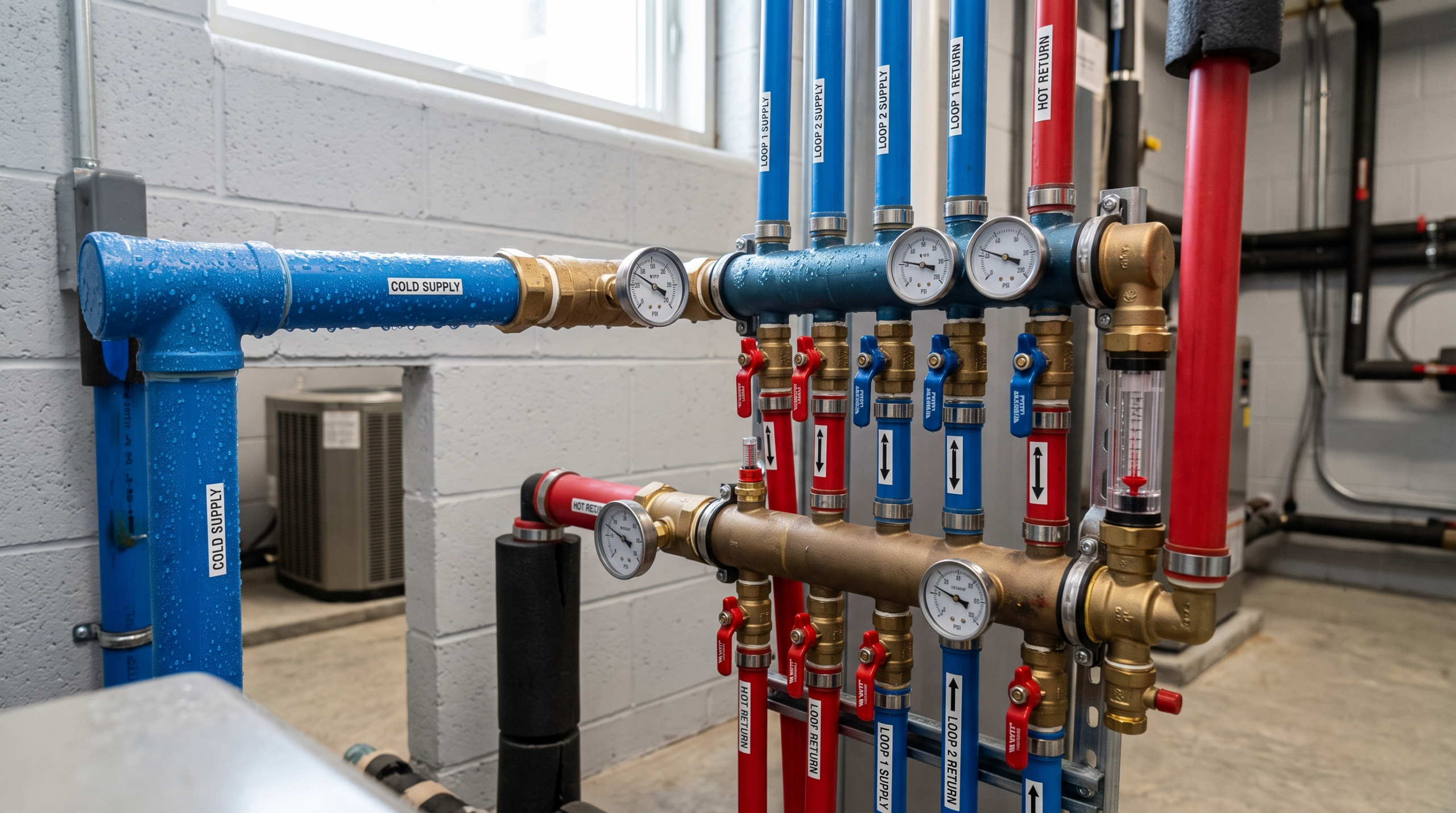
A ground-source system never faces that problem. According to the U.S. Department of Energy, the buried loop that feeds a geothermal heat pump stays roughly 45 to 75°F year round, regardless of what the air above ground is doing. With no outdoor coil exposed to freezing temperatures, there is no frost to melt and no defrost cycle to run, which keeps COP in a narrow, predictable 3.0 to 5.0 range across the entire season instead of swinging with the outdoor thermometer.
That is the part of the SPF story a ground-source system gets right almost automatically. The part that still separates one water-to-water heat pump from another is what happens when the unit also has to make hot water.
What Really Widens the Gap: Domestic Hot Water
COP falls as the temperature lift, the difference between the source temperature and the delivery temperature, grows. Space heating through radiant floor tubing or fan coils typically only needs a supply temperature in the 90-120°F range. Domestic hot water needs to reach 120-140°F for code and comfort, a meaningfully bigger lift for the compressor to climb, and therefore a lower COP in DHW mode than in space-heating mode on the same machine.
One Unit, Every Load
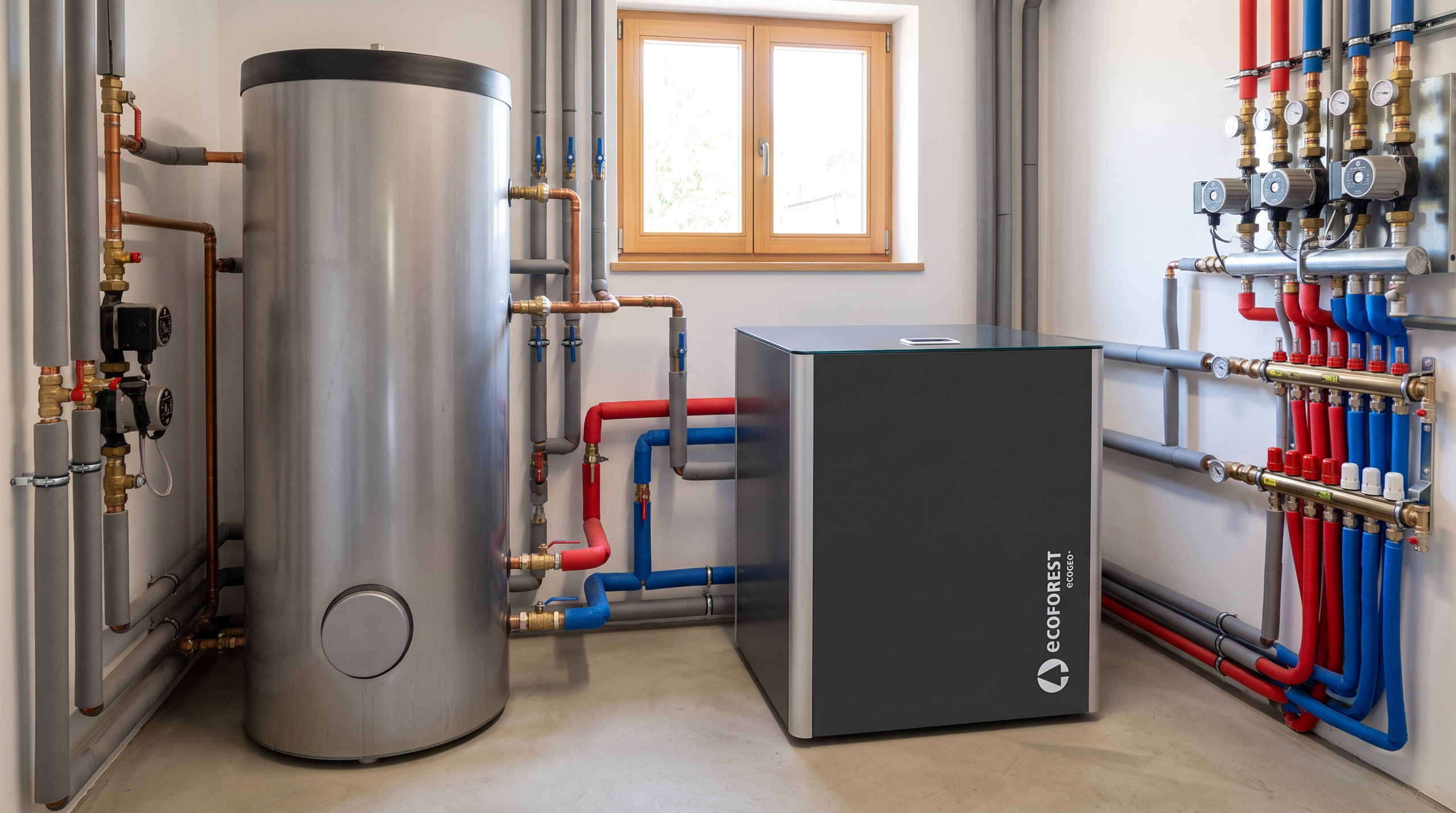
A combination unit like the ecoGEO+ WWA produces heating, cooling, and domestic hot water from a single full-inverter water-to-water heat pump, so its published SPF already carries the DHW load in the average. A heat pump quoted on space-heating COP alone, with a separate water heater sitting next to it, never has to publish a number that includes that load at all.
- Space heating and radiant floor: modest lift, higher COP
- Domestic hot water: bigger lift, lower COP, and usually the highest-demand task any heat pump does
- An honest SPF has to average across both, all season
AHRI/ISO 13256-1 was adopted virtually unchanged as CSA C13256-1 in Canada, so a COP or SPF figure means the same thing on a spec sheet whether the project sits in Vermont or Ontario. For firms working both markets, that consistency is one less variable to reconcile between a US and a Canadian submittal.
COP vs. SPF at a Glance
| Metric | What It Measures | Rated Under | What It Leaves Out |
|---|---|---|---|
| COP | One fixed operating point | AHRI/ISO 13256-1 (CSA C13256-1 in Canada) | Part-load behavior, DHW load, defrost (air-source) |
| HSPF2 (air-source only) | Full heating season | DOE / AHRI regulated | Cooling season, DHW load |
| SPF | Every mode the unit actually runs, all season | EN 14825 convention, applied by the manufacturer | Closest to the real utility bill |
Domestic Hot Water Load
A fair SPF folds in the highest-lift, lowest-COP task the unit performs, not just its easiest one.
Full Heating and Cooling Season
Both seasons, not just the one that makes the number look best.
Real Part-Load Behavior
How the compressor performs while modulating, not only at full-speed output.
Local Climate Data
Ground and outdoor temperatures specific to the project’s climate zone, not a generic average.
Frequently Asked Questions
Ask your next spec for SPF, not just COP.
Our team provides free technical support for architects, engineers, and contractors across the U.S. and Canada: performance modeling, DHW load calculations, and system specification for water-to-water geothermal projects.
Or subscribe for technical guides and case studies.
Keep reading
 Luxury ResidentialGeothermal for Large Luxury Homes: Silent, Invisible, and Built to Last
 ROI GuideGeothermal Heat Pump Cost for Luxury Homes: The Honest ROI Guide
 MultifamilyGeothermal Heat Pumps for Multifamily Buildings: A Smarter Way to Heat, Cool and Save
 Water vs. AirHydronic vs. Forced Air Heat Pumps: The Definitive Comfort Comparison