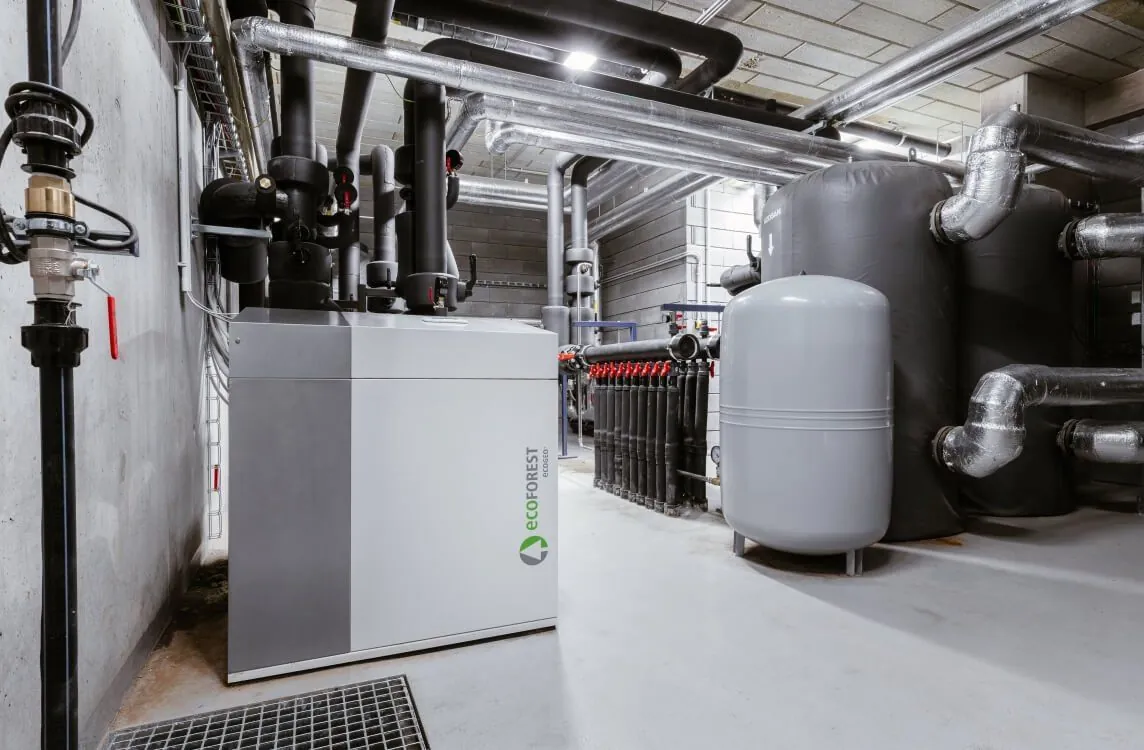
Every ecoGEO+ runs on the same few ideas: a variable-speed compressor, heat and cold made together, any heat source, and a controller that runs the whole installation.
Built to be efficient, and to be easy to live with.
149 °F hot water
Hot water on demand up to 149 °F, and up to 167 °F with HTR, the high-temperature mode, so the unit can serve laundries, kitchens and pools without extra heaters.
Heating up to 140 °F
Water at the temperature that radiators, fan coils and radiant floors need.
R454B refrigerant
The current refrigerant for the US market, in the whole range.
Quiet outdoors
With dry coolers there is no compressor outside, only a fan and an exchanger.
It runs as slow as the building allows.
A staged machine jumps between fixed steps and produces more than the building needs. An Ecoforest inverter compressor follows the demand, from 20 to 100% of its capacity, so it rarely switches on and off.
Building demand
Staged machine
Ecoforest variable speed
Staged0%
Variable0%
0:00
Illustrative model of one day, not a measurement. The staged machine has two steps, 50 and 100%.
Heat and cold, at the same time or in turn.
Simultaneous consumption
A hot tank and a cold tank store the energy. The heat pump keeps each one full, one after the other. To make heat it extracts it from the ground loops, and to make cold it injects heat back into them. Four pipes reach the building.
Simultaneous production
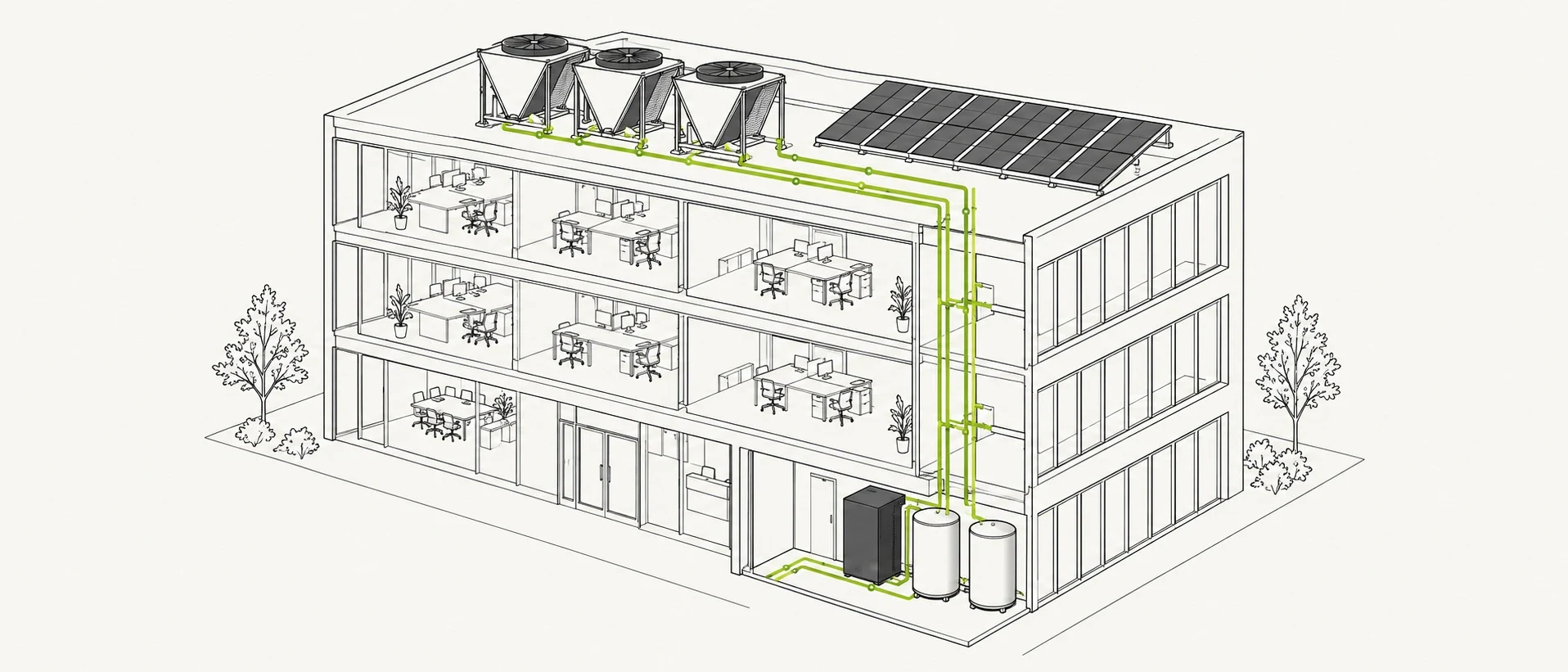
The unit makes heating and cooling in the same moment and moves the energy from the cold side to the hot side. The ground or the dry coolers only supply or take the difference. Hot water, pools and process heat feed from the cooling load.
Ecoforest writes its own control software. The unit commands the pumps, the valves, the tanks and the sources, and it talks to the cloud, so there is no external controller to program. Pick a part to see what the unit does with it.
ecoGEO+Controller and software
Any heat source the building has.
The unit takes heat from whatever the site offers and rejects it back when the building needs cooling. The e-source controller manages up to three sources at the same time and picks the most efficient one at each moment.
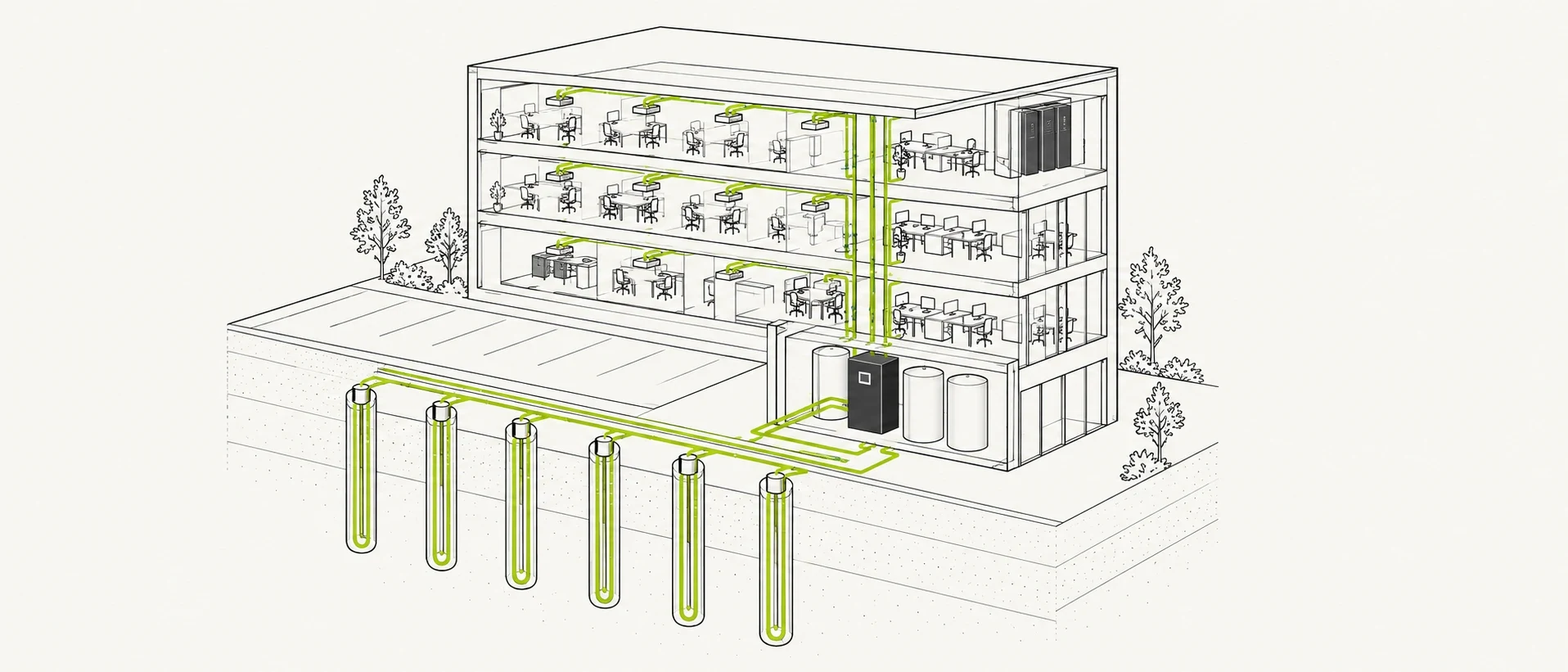
Vertical loops
Closed loops in boreholes. The ground keeps a steady temperature all year, which gives the best efficiency and takes the least land.
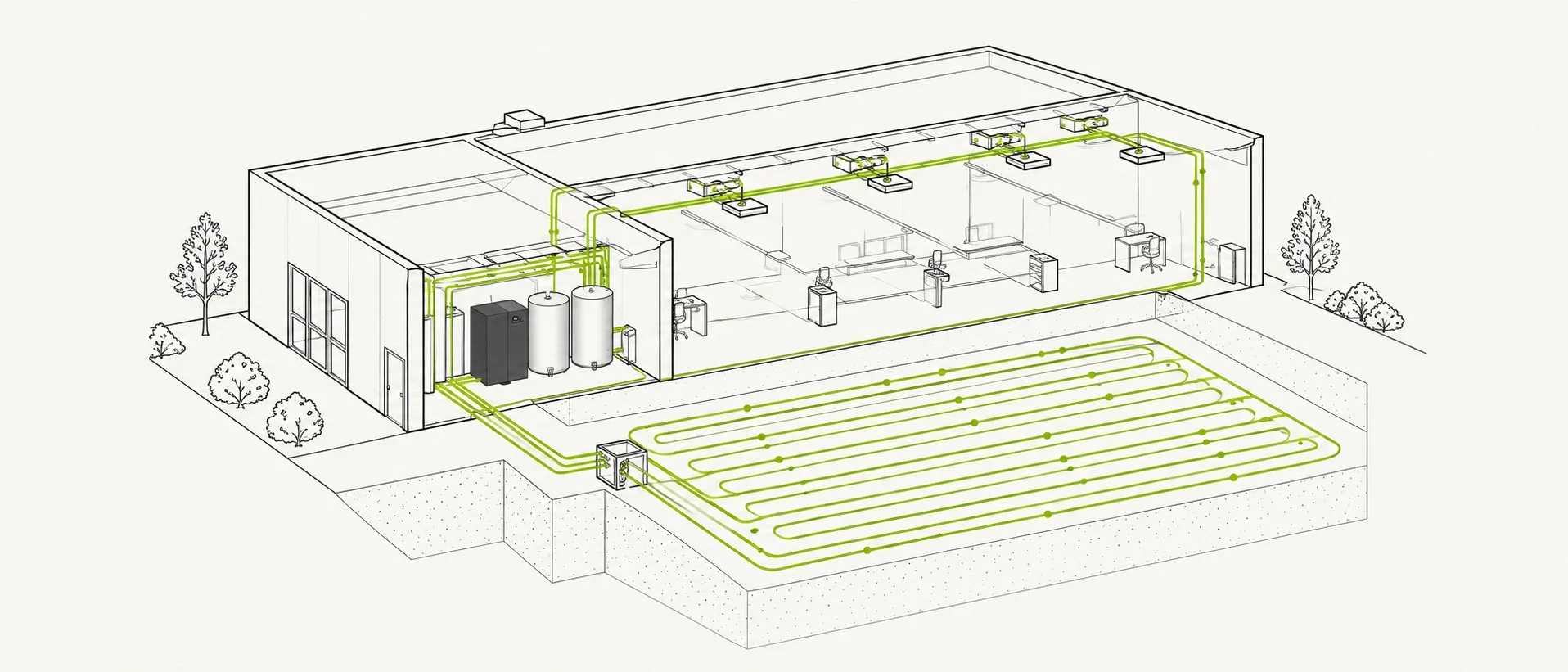
Horizontal loops
Closed loops buried at a shallow depth across open land. They suit sites with space and keep drilling to a minimum.
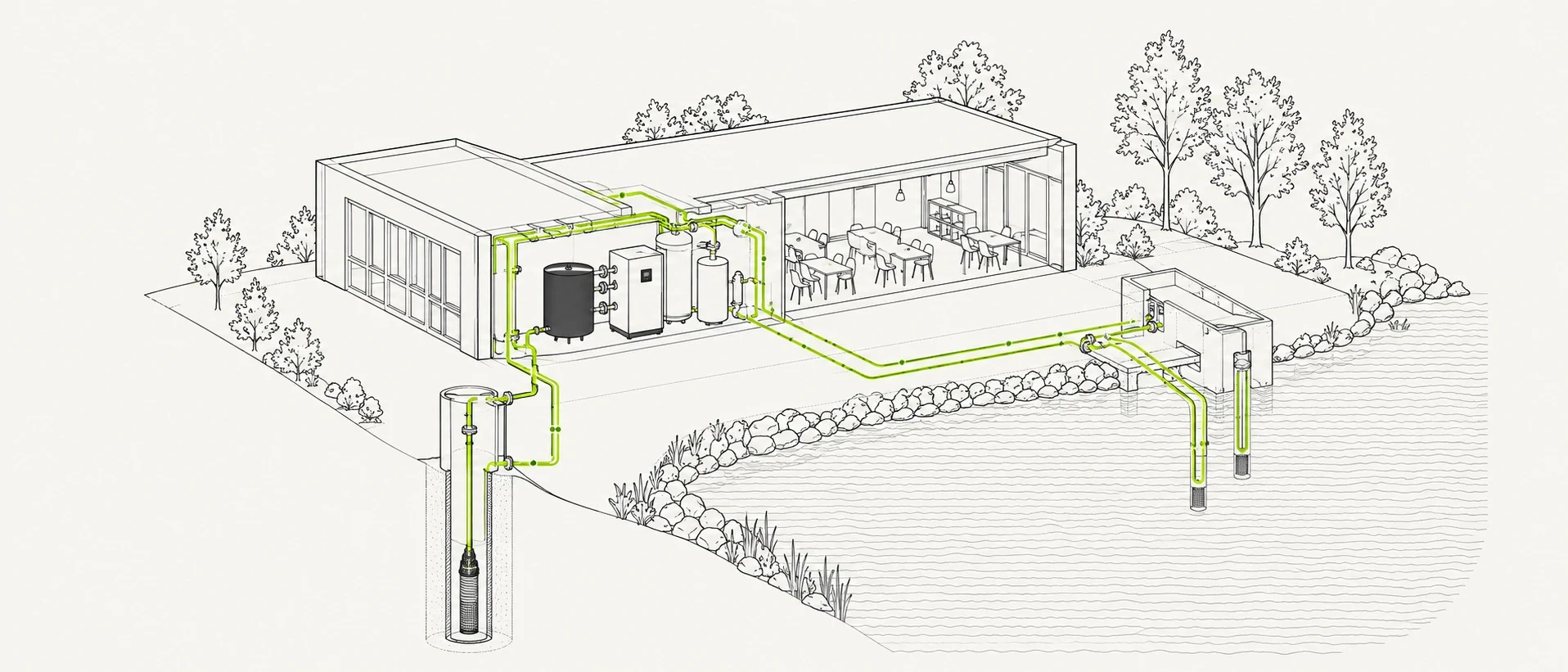
Lakes, rivers, the sea and wells
Open loops use the water that is already there. Ecoforest has reference plants on lakes, a moat and a thermal spring.
Dry coolers
Geothermal-style efficiency without boreholes, and at a lower first cost. Outdoors there is only an exchanger and a fan.
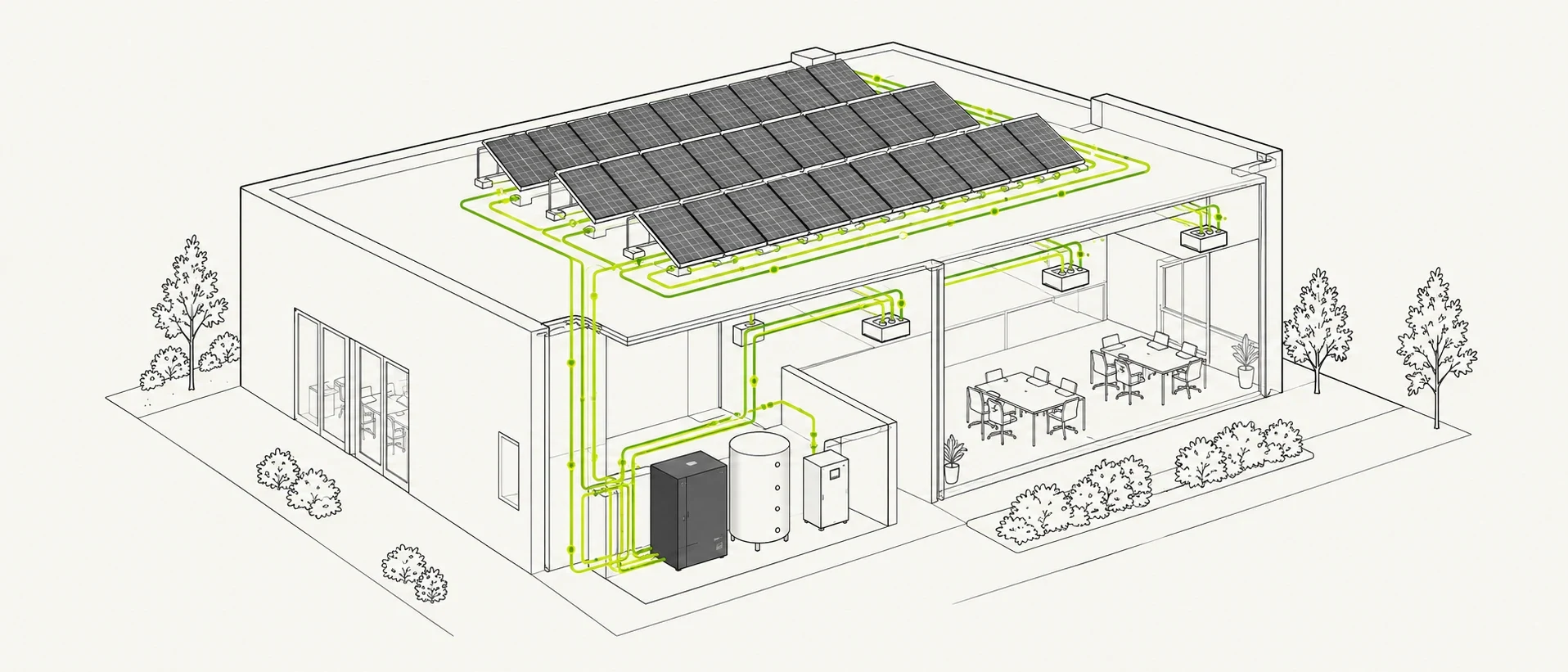
Photovoltaic-thermal panels make electricity and collect low-temperature heat from the same roof area.
Waste heat and process heat
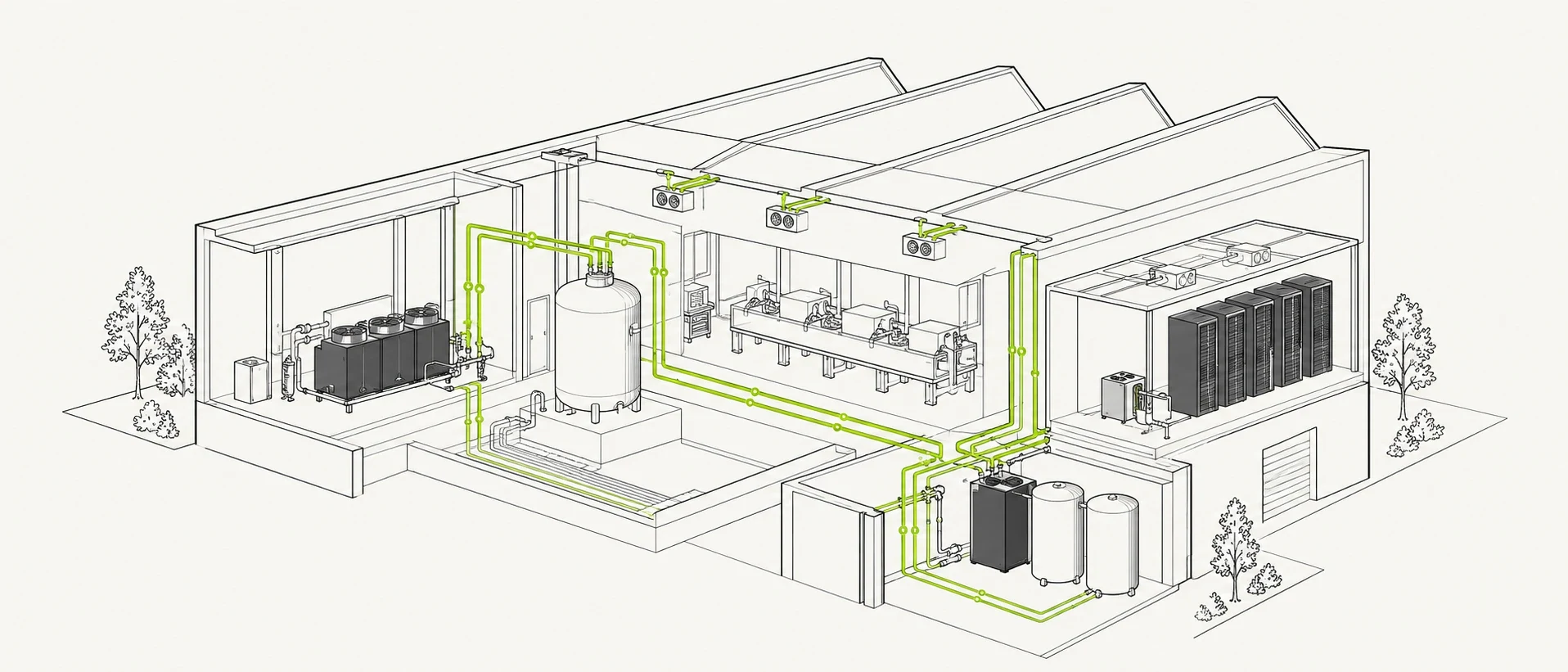
Process water, refrigeration, server rooms or wastewater. If a building throws heat away, the plant can use it.
Use your own solar power as stored heat.
With a bidirectional meter, the unit knows when the panels produce more than the building uses. It moves its setpoints to store that surplus as heat or cold in the tanks and the building, and it returns to normal when the sun goes.
Hot water
120 °F
Heating
120 °F
Cooling
50 °F
Pool
80 °F
Example setpoints. They are the temperature of the water sent through the pipes.
Add units as the building grows, up to 150 tons.
Choose how many 25-ton ecoGEO+ HP units the cascade has, up to six and 150 tons, then move the demand. Each running unit stays in its most efficient range and the operating hours are balanced between them. With more than 3 units the Supervisor coordinates the cascade, and with 3 or fewer the unit’s own controller does it.
Example with six 25-ton units, 150 tons in total.
Built for cold climates, and for your budget.
Not every climate is ideal for green energy. Heat pumps lose capacity at extreme outdoor temperatures, and not every building is the same. That is why Ecoforest’s software also controls the backup systems and the whole installation, and adapts to each case, always keeping the backup as the last resort.
The backup is always the last resort. The heat pump does the work. A backup comes in only at very extreme outdoor temperatures, or for safety.
Dry cooler plants plan for it. With dry coolers and extreme cold, a backup is part of the design. It connects after the heat pump, on the production side.
Many options. The residential units carry a 6 kW electric element. The software also controls electric heaters in the buffer or hot water tanks, and electric, gas or oil boilers.
One controller for everything. The unit decides when to call the backup and keeps the sources, the tanks and the pumps in balance.
100% of heat pump power
Heat pump
Backup boiler
Illustrative model of a plant with dry coolers, not a measurement. The bar shows the heating load. At 10 °F the heat pump gives its full power.
See it in your project.
Send the plans or the loads. Ecoforest’s technical office reviews the design at no cost.