
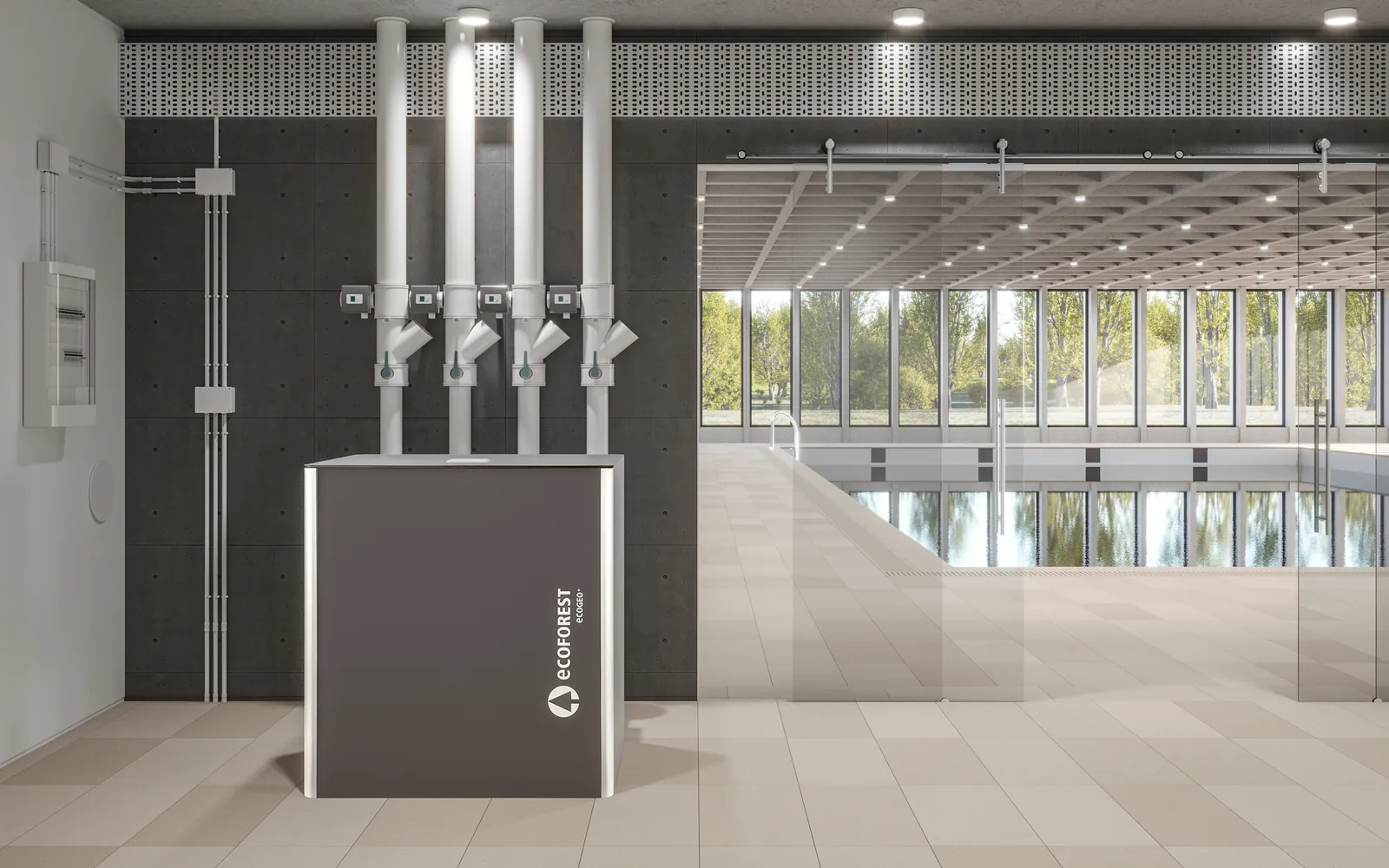
One plant. Hot and cold, all year.
ecoGEO+ HP heat pumps for wineries, factories, offices, hotels, gyms and large homes. One variable-speed plant makes heating, cooling and hot water up to 149 °F, and can make heat and cold at the same time.
Two modes, one plant.
Choose how the plant works. Both use the same variable-speed compressor, and the unit controls everything.
Two tanks, one heat pump.
- Hot tank
- 120
- Cold tank
- 50
- Moved from cold to hot
- 100
- Taken from the ground
- 100
Illustrative model with example temperatures, not a measurement. Hot water is made up to 149 °F, and up to 167 °F with HTR.
Where it fits.
Pick a building to see what needs heat, what needs cold and which mode suits it.
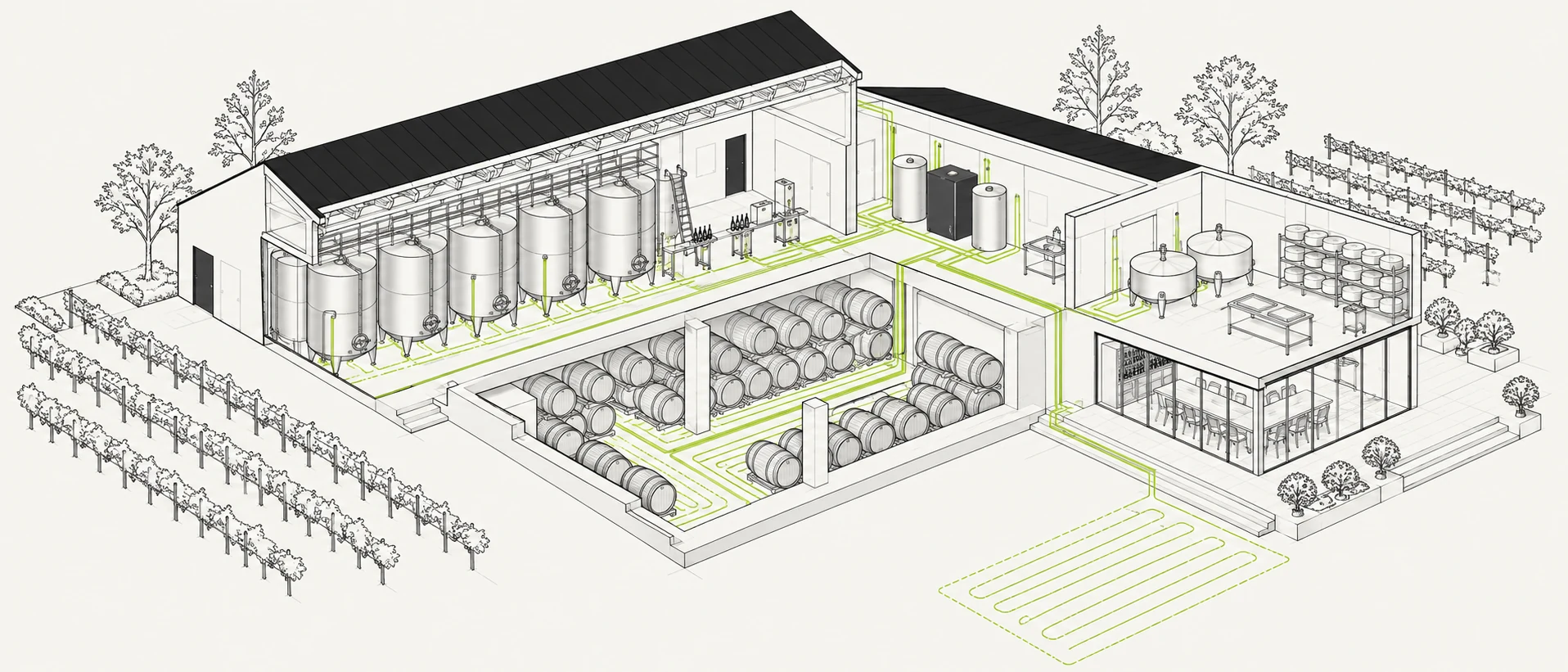
Needs heat
Needs cold
Best fit
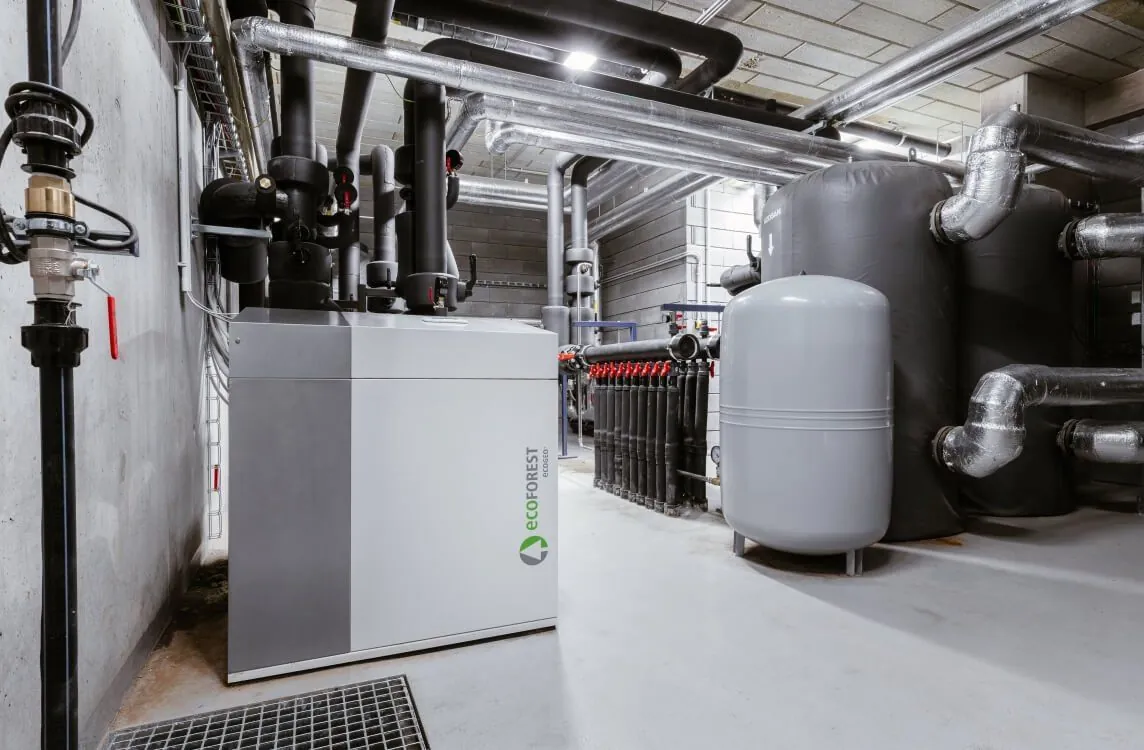
One plant, a short list of parts.
- Variable speed
- The compressor modulates continuously from 20 to 100%, so the plant follows the demand instead of switching on and off.
- Heat, cold and hot water
- One unit makes heating, cooling and domestic hot water up to 149 °F on demand, and up to 167 °F with HTR.
- Any source
- Ground loops, dry coolers or both. The e-source controller manages up to three sources.
- Solar ready
- With a bidirectional meter, the plant stores solar surplus as heat or cold in the tanks and the building.
Any heat source the building has.
The unit takes heat from whatever the site offers and rejects it back when the building needs cooling. The e-source controller manages up to three sources at the same time and picks the most efficient one at each moment.
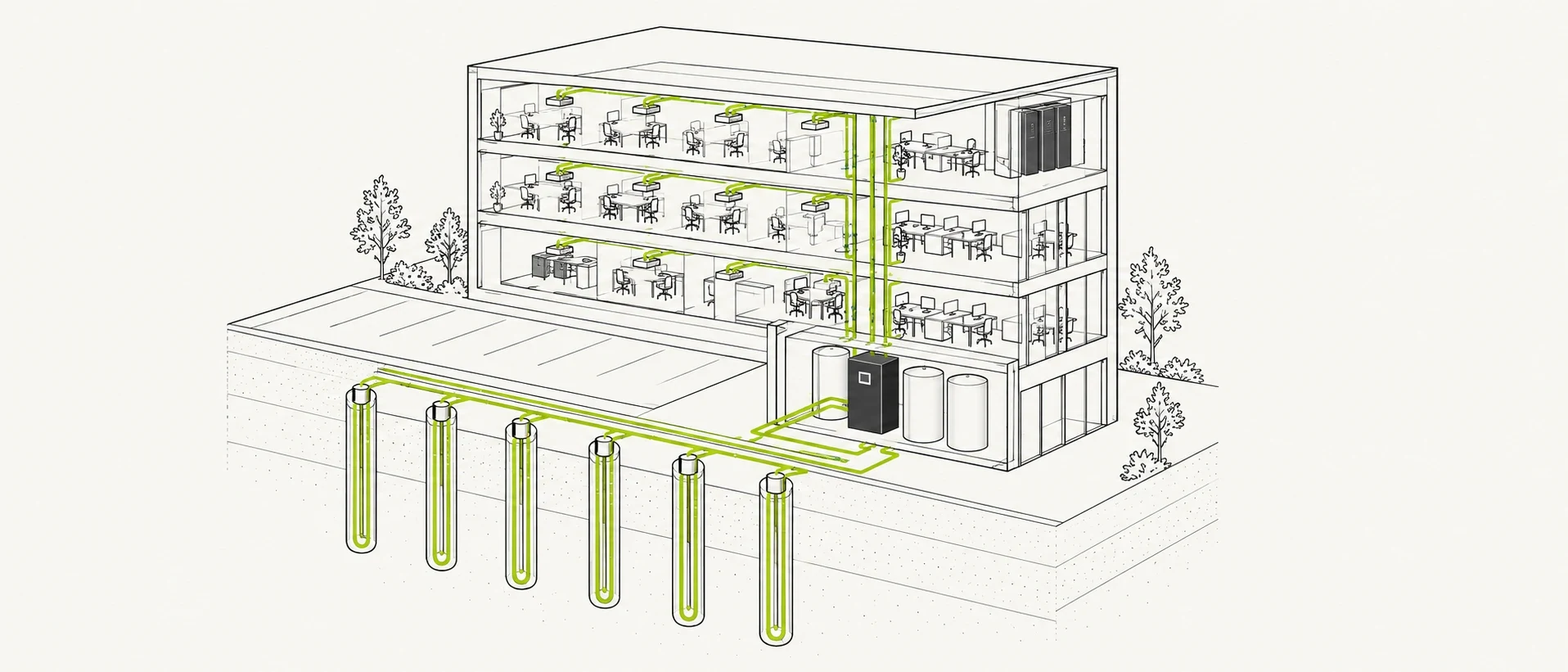
Vertical loops
Closed loops in boreholes. The ground keeps a steady temperature all year, which gives the best efficiency and takes the least land.
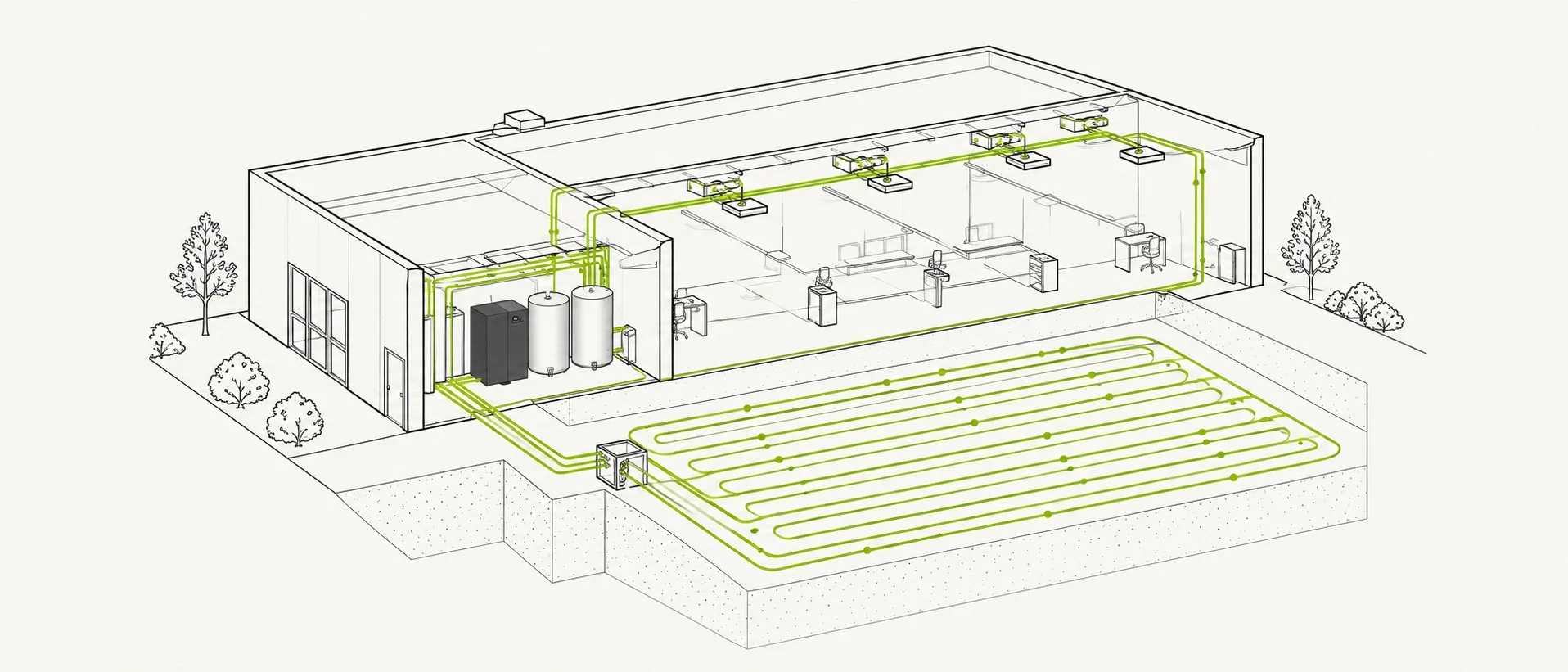
Horizontal loops
Closed loops buried at a shallow depth across open land. They suit sites with space and keep drilling to a minimum.
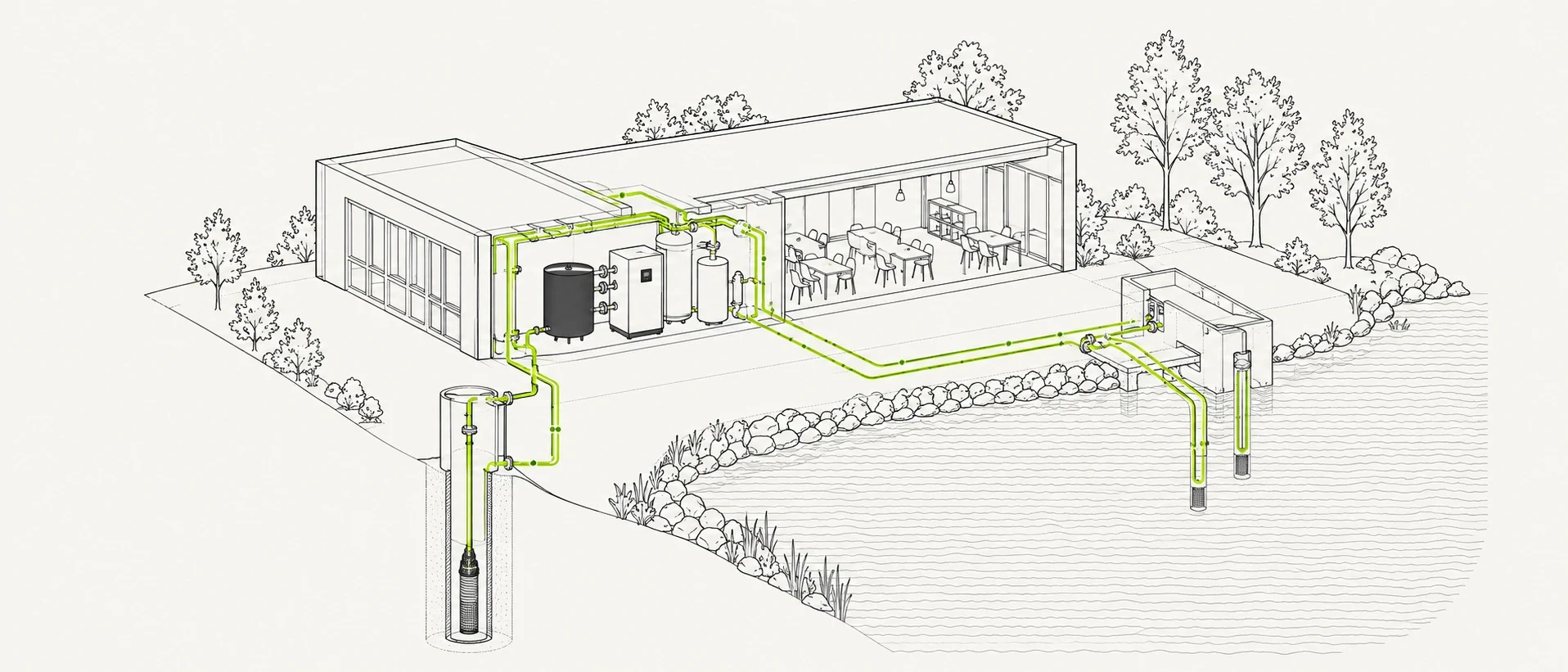
Lakes, rivers, the sea and wells
Open loops use the water that is already there. Ecoforest has reference plants on lakes, a moat and a thermal spring.
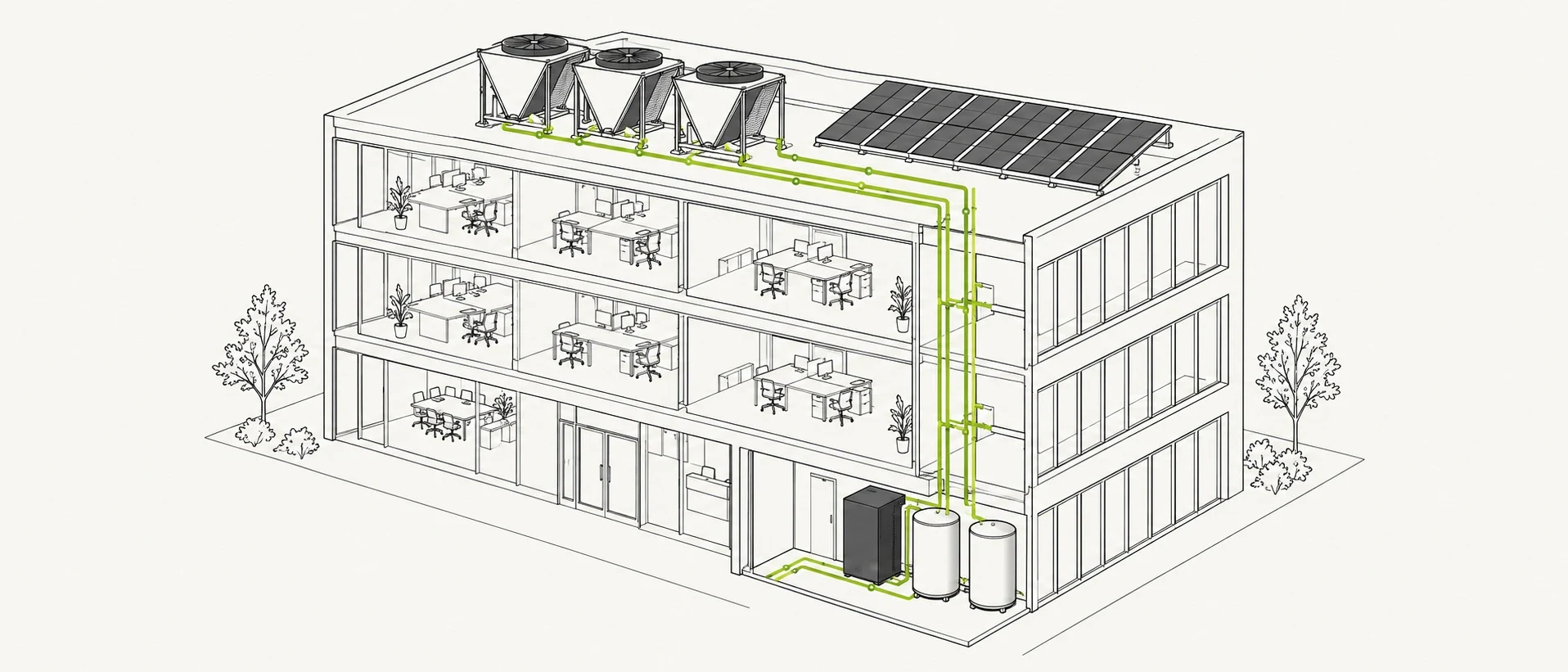
Dry coolers
Geothermal-style efficiency without boreholes, and at a lower first cost. Outdoors there is only an exchanger and a fan.
See ecoGEO+ with dry coolers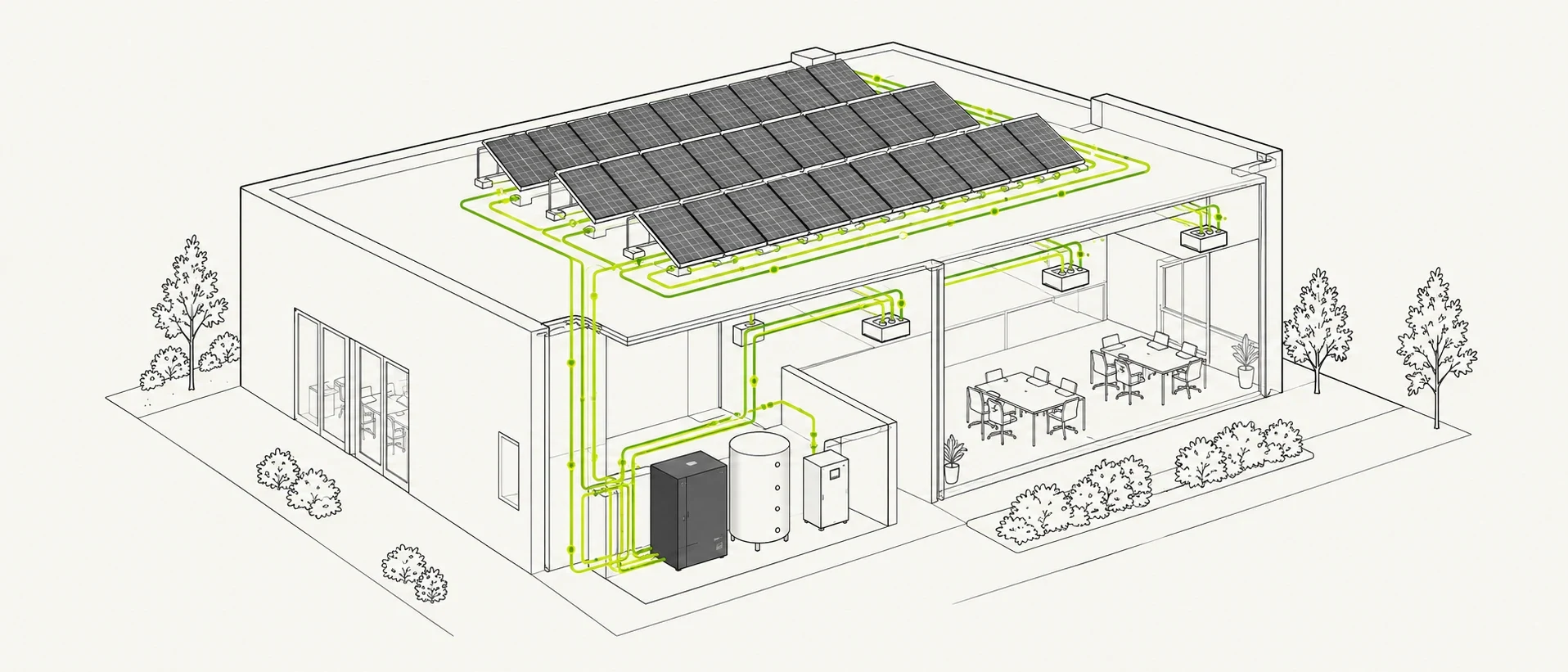
PVT panels
Photovoltaic-thermal panels make electricity and collect low-temperature heat from the same roof area.
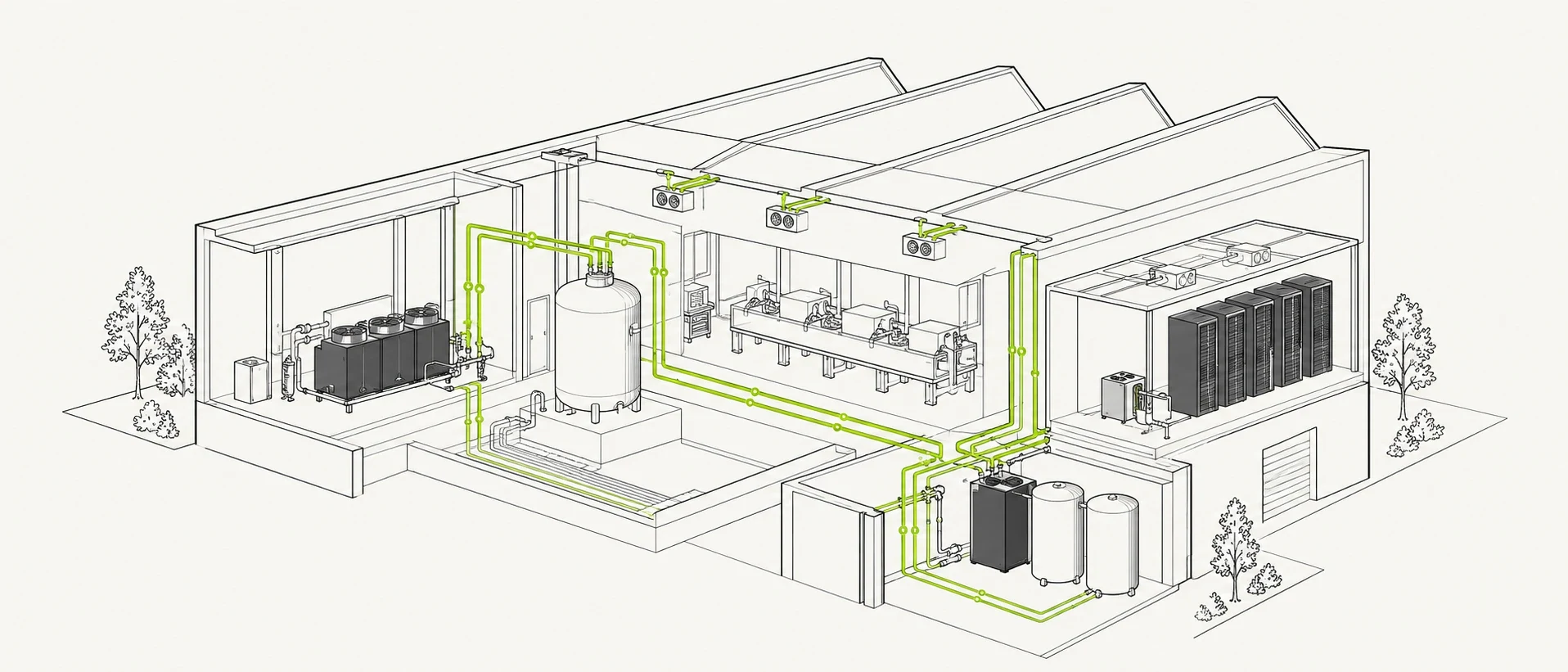
Waste heat and process heat
Process water, refrigeration, server rooms or wastewater. If a building throws heat away, the plant can use it.
Built for cold climates, and for your budget.
Not every climate is ideal for green energy. Heat pumps lose capacity at extreme outdoor temperatures, and not every building is the same. That is why Ecoforest’s software also controls the backup systems and the whole installation, and adapts to each case, always keeping the backup as the last resort.
- The backup is always the last resort. The heat pump does the work. A backup comes in only at very extreme outdoor temperatures, or for safety.
- Dry cooler plants plan for it. With dry coolers and extreme cold, a backup is part of the design. It connects after the heat pump, on the production side.
- Many options. The residential units carry a 6 kW electric element. The software also controls electric heaters in the buffer or hot water tanks, and electric, gas or oil boilers.
- One controller for everything. The unit decides when to call the backup and keeps the sources, the tanks and the pumps in balance.
- Heat pump
- Backup boiler
Illustrative model of a plant with dry coolers, not a measurement. The bar shows the heating load. At 10 °F the heat pump gives its full power.
Add units as the building grows, up to 150 tons.
Choose how many 25-ton ecoGEO+ HP units the cascade has, up to six and 150 tons, then move the demand. Each running unit stays in its most efficient range and the operating hours are balanced between them. With more than 3 units the Supervisor coordinates the cascade, and with 3 or fewer the unit’s own controller does it.
Example with six 25-ton units, 150 tons in total. The 25-ton unit is available in three phase 208 to 230 V.
Reference projects.
Railway station
Three ecoGEO+ HP1 in cascade, 74 tons. Heating and cooling at the same time, on 25 horizontal ground loops of 490 ft under the tracks.
Sports complex
Three ecoGEO+ HP in cascade, 72 tons, for an indoor pool, gym, saunas and rehabilitation rooms. Heating, cooling and hot water together.
Port facility
One ecoGEO+ HP3 heats, cools passively and actively, and makes hot water. SPF 6.4, and 9.9 in May.
University building
Five ecoGEO+ HP, 142 tons, on ground and air sources. SCOP 3.7, with about 246 tons of CO2 avoided per year.
School campus
A 626-ton heat network for 18 buildings, drawing from lakes and 160 boreholes. About 198,000 gallons of heating oil avoided per year.
Thermal spa
Three ecoAIR+ EVI units, 205 MBH, make stable hot water at very low outdoor temperatures.
Questions from owners and engineers.
What is the difference between the two modes?
In simultaneous consumption, the plant keeps a hot tank and a cold tank at their temperatures, one at a time, and the building draws from both whenever it needs. In simultaneous production, the plant makes heat and cold at the same moment and moves energy from one side to the other, which suits buildings that need both all year.
Why two tanks?
The tanks store hot and cold water, so the heat pump can serve one while the other is still in range. That gives the building heating and cooling on demand with four pipes, and keeps the compressor from switching on and off.
When does simultaneous production pay off?
When the building needs heat and cold during the same period, for example process cooling with hot water for washing, a gym with showers and a pool, or a hotel with a spa. The cold side supplies the hot side, and the ground only supplies the difference.
How hot can the water get?
Domestic hot water reaches 149 °F on demand, and up to 167 °F when the HTR heat recovery is used. Space heating water goes up to 140 °F.
What sizes are available?
The ecoGEO+ HP covers 50 to 240 MBH and 70 to 300 MBH, in three phase 400 to 480 V, and the 25-ton unit also in three phase 208 to 230 V. Up to six units run in cascade, 150 tons in total.
What heat sources can it use?
Closed loop, open loop and dry cooler, alone or in a hybrid. A dry cooler gives you a geothermal-grade heat pump without boreholes.
Can it also heat a pool or melt snow?
Yes. The unit controls one group for the pool or ice melting, with its own setpoint, alongside the building.
Are there incentives?
Federal and state programs for commercial buildings may apply to your project. Confirm eligibility with your tax advisor before you rely on any incentive.
Tell us about your building.
Send the plans or the loads. We will come back with the units, the schematic and the heat source.
Request a preliminary scope.